 Welcome!
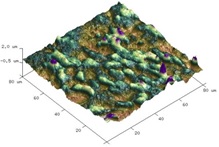

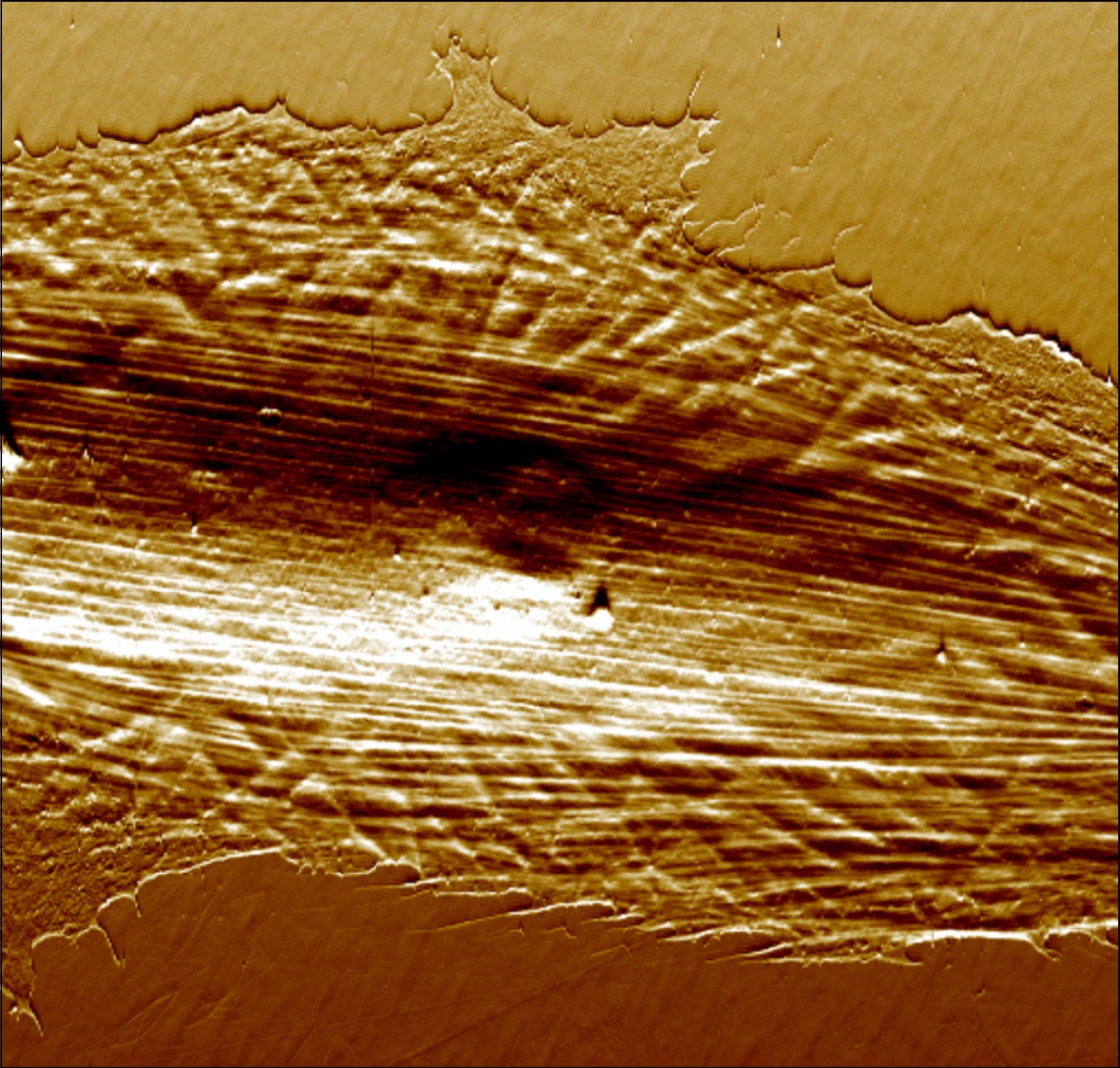
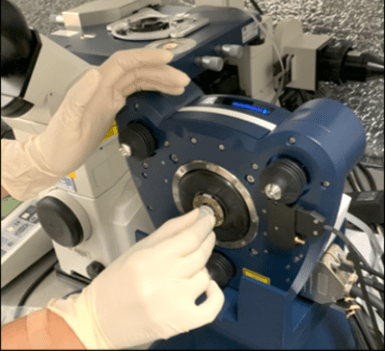
Atomic Force Microscopy (AFM) is a noninvasive technique that produces high-resolution topographic images under physiological-like conditions. Scanning can be performed in air or in a liquid environment, allowing imaging of a wide range of samples, from living cells down to single molecules.
AFM is also a powerful tool for studying dynamic processes such as cellular endocytosis of nanovectors and systemic responses to biological events. A major area of interest is determining sample stiffness (Elastic modulus) to assess experimental data. The elasticity of the sample surface can vary between cell/tissue types and change as a function of growth, differentiation, disease, or treatment. In addition, AFM can image non-cellular structures with exceptional detail.
With the recent acquisition of our NanoWizard V AFM (NIH grant 1S10OD036249), we can now perform PeakForce Quantitative Imaging (PFQI), enabling precise measurement of mechanical properties such as stiffness, adhesion, and modulus at every pixel while capturing high-resolution topography.
The core utilizes a NanoWizard V Atomic Force Microscope (JPK, Bruker Nano Inc.) that requires minimal sample preparation. This system is integrated with a Nikon TE2000 inverted optical microscope, enabling simultaneous acquisition of bright-field and fluorescence images of samples under study.
We welcome inquiries from internal, external, and public sector partners. Please contact us for more information.
|
Ana Maria Zaske, PhD |
|
This work was supported by the NIH Shared Instrumentation Grant S10OD036249‑01A1, which funded the NanoWizard V Atomic Force Microscope used in this study at the AFM Core Facility, McGovern Medical School, UTHealth Houston.
| Hours | Location |
|
Monday - Friday 9 am - 5 pm |
Internal Medicine, UT-Health |
| Name | Role | Phone | Location | |
|---|---|---|---|---|
| Ana Maria Zaske, PhD |
Director
|
713-486-5418
|
Ana.M.Zaske@uth.tmc.edu
|
1881 EAST RD, 3SCRB6.3728, HOUSTON, TX 77054
|
